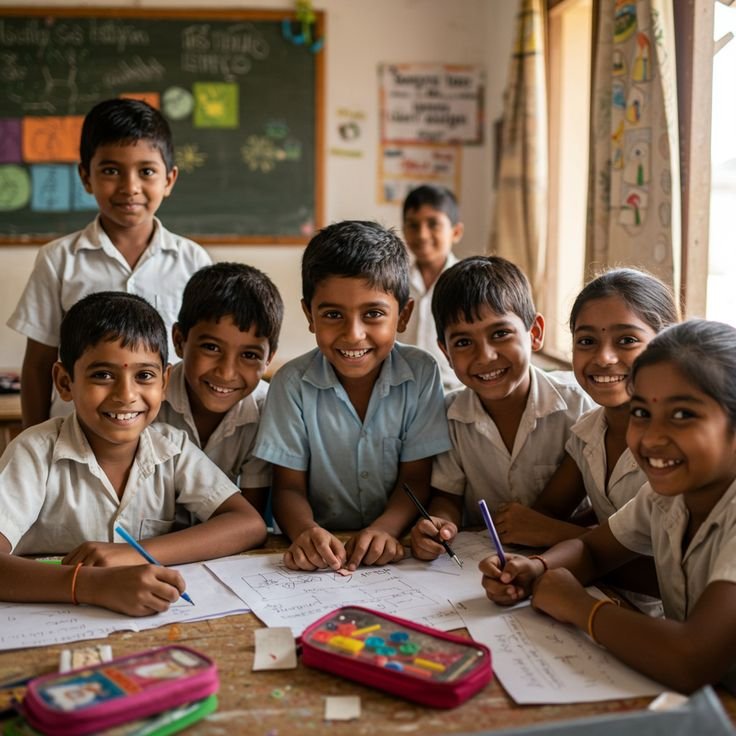
Education is the foundation for social and economic development. B.G. Samste (Reg) works towards ensuring access to quality education for children, youth, and adults from rural and economically weaker sections. Through educational support programs, literacy initiatives, and skill development training, the organization aims to reduce dropout rates and create better future opportunities.
Why Education
If we need to address healthcare, poverty, population control, unemployment and human rights, there’s no better way to start than providing education to children in need. Education not only empowers children to have a secure future but also helps them grow up as responsible national and global citizens. The Right to Education (RTE) Act which came into force in 2010 made education free and compulsory for all children in the age group of 6-14 years. But even a decade later, the learning curve has not been steady for many children in the country. The socio-economic conditions of parents and lack of proper learning in schools are hindrances which prevent many children from having education.
What We Do
B.G. Samste’s Education Programme is designed to empower underprivileged children by ensuring access to quality education along with essential nutritional and wellness support. The programme aims to create a strong foundation for lifelong learning and holistic development.
Aligned with the principles of the National Education Policy (NEP) 2020 and Sustainable Development Goal 4 (SDG-4), the initiative focuses on inclusive and equitable education for all children, especially those from marginalized communities.
The programme supports children aged 3 to 18 years who are living in challenging circumstances, including children from economically weaker families, differently abled children, disaster-affected children, orphaned and street children, and those residing in tribal areas, remote villages, and hard-to-reach rural regions.
Through community engagement, academic support, nutrition awareness, and wellness initiatives, B.G. Samste works to reduce school dropouts, improve learning outcomes, and ensure that every child gets an opportunity to grow with dignity and confidence.
The programme aims to provide access to quality education, reduce school dropouts, and support the holistic development of children from underserved communities.
Children and youth aged 3 to 18 years from economically weaker sections, rural and tribal areas, differently abled children, and disaster-affected or marginalized communities can benefit.
The programme offers academic support, foundational literacy and numeracy programs, digital learning, STEM exposure, nutrition awareness, and extracurricular activities.
The initiative aligns with the National Education Policy (NEP) 2020 and Sustainable Development Goal 4 (SDG-4), focusing on inclusive and equitable quality education.